Articles from the Archives
Welcome to the Equine Touch archive.
Please click the button to read the full article in PDF version, or continue scrolling to read full articles.
How Equine Touch works by Ivana Ruddock
Ivana explores the science and theory which underpins the unique “move,” explaining the many benefits that ET sessions offer our horses, and provides insight into how it may influence soft tissue, circulation, and overall wellbeing.
Hands on Healing: Your Horse Magazine
This article by Andrea McHugh discusses the impacts of Equine Touch, featuring Babette.
Tension by Nicky Studd
(Instructor and Practitioner, based in Kent)
“Helps Relieve Tension”
It is a phrase we often use when describing the benefits of our Equine Touch bodywork modality, as well as many other techniques available to our horses. But what do we actually mean by this?
Tension is the result of short or long term stress on the body and mind from internal or external factors that conflict or impede the ideal state which allows a healthy, calm and functional ability of the body and mind.
Examples would be:
✏️ Prolonged inclement weather and the impact this causes to the horse’s environment such as restricted movement and lack of herd socialisation, hoof abscesses and thrush, slips in the field or lack of quality rest.
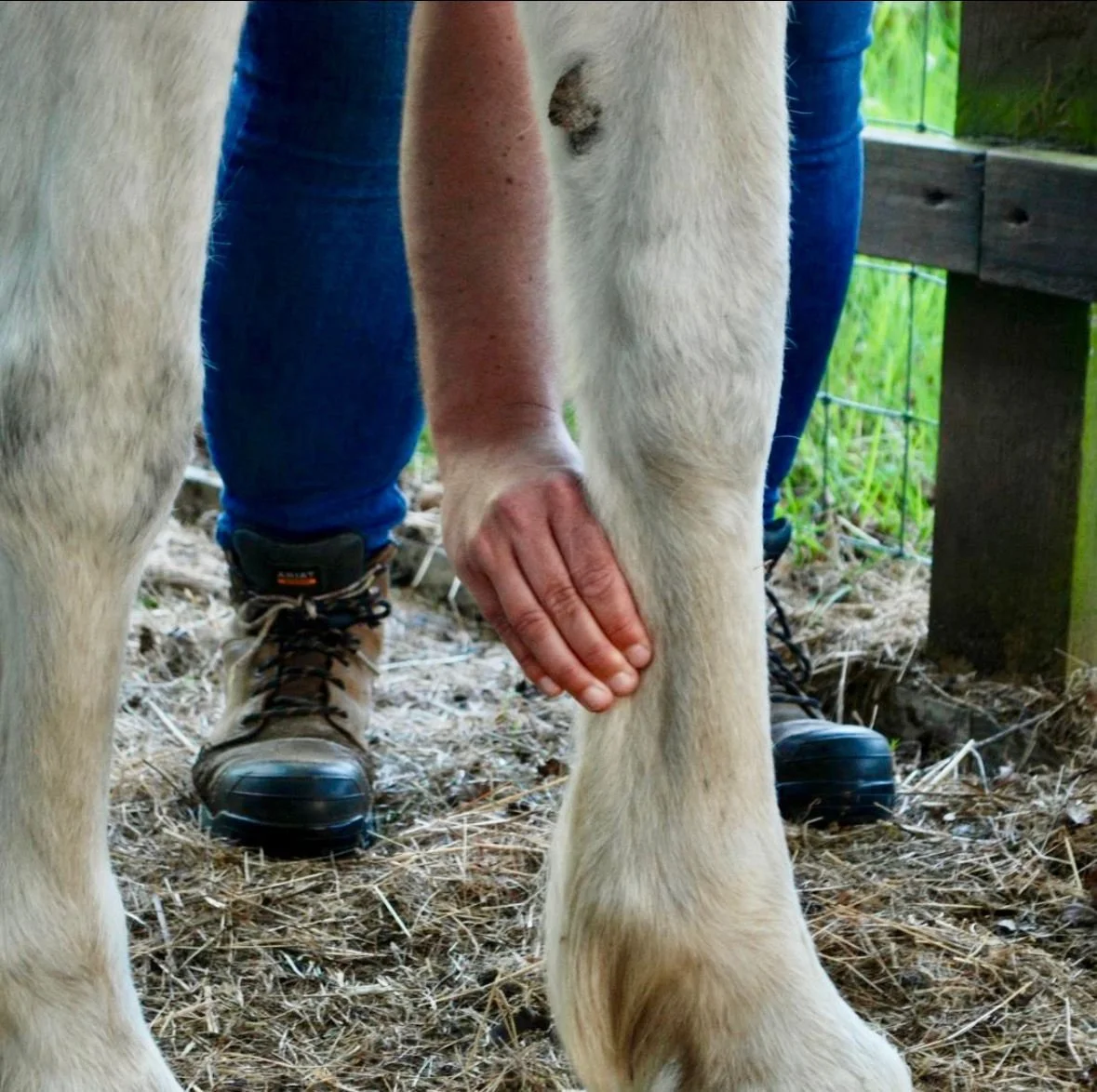
✏️ Ongoing lameness from accident or illness which causes the body to build supporting compensatory patterns.
✏️ Incorrect or unsuitable tack and equipment such as training gadgets, poor fitting saddles or unbalanced riders.
✏️ Misunderstood behavioural signals that lead to reprimand or unheard needs for change by the horse.
✏️ Emotional distress such as loosing a companion or separation anxiety or unable to escape a pressurised situation such as being forced into an unnatural frame.
These are a few examples but on a day-to-day basis I encounter many more. Some of which are out of our control and some that we can listen and learn to help improve the welfare of the horse.
The purpose of applying The Equine Touch bodywork is to provide a moment of relief, create new awareness and change habitual patterns, open the door to the horse’s innate healing ability and encourage the parasympathetic nervous system response ‘Rest & Digest’ also known as the healing state to work its magic on the body and mind of the horse.
When we are working, we are looking for these compensatory holding patterns, that hold tension within the body then by gently creating space and movement where there previously has been resistance and lack of flow physically and energetically that can cause pain and discomfort, brings relief.
So what does this look and feel like?
You might observe subtle signs such as worried eyes, a tense jaw and ears placed diagonally, a clamped tail, loose droppings or the inability to settle when tied up.
Physical signs such as an irregular rhythm in movement that you may observe visually and by sound, consistently resting a particular limb or often switching legs. Not happy with touch in particular places such as the poll or stifle or moving away from pressure such as dipping the back when palpating the spine.
You can also find lack of movement in the soft tissue and fascia of the body, this will feel stuck or hard to move, maybe a change in temperature hot or cold or potentially lumpy or lacking structure and tone.
When I am working with a horse, I am looking for balance across the whole body, or lack of. I will observe the horse’s behavioural responses and be guided by them as to how I approach the session with them. I am feeling for these changes in tension and gently, slowly encourage new movement in the area by stretching the fascia, creating new space for nerves, blood vessels, lymphatic vessels that sit within the fascia and open up space between the muscles, tendons and ligaments. This in turn brings greater range of movement within joints and will encourage better balance and structure across the skeletal system.
I am also feeling for energy, often this feels like a warm buzzing sensation, or an unseen but tangible feeling of pressure like touching jelly and then moving with it. Sometimes I will feel this directly on the body, sometimes I will feel it a couple inches off the body. All the time observing the horse’s reactions.
By changing this tension in the body and mind, we are helping the horse positively but also being mindful that some of these tensions such as habitual patterns are protecting the horse from a bigger problem and so we do not want to make any changes too fast or too hard. This is why The Equine Touch works slowly across a number of sessions utilising one of the most important requirements to change, which is time.
This is, in a rather large nutshell, what it means to help relieve tension in a bodywork session.
Fascinating Fascia By Audrey Anderson
(Coach and Practitioner, based in Scotland)
Fascinating FASCIA of the equine body with THE EQUINE TOUCH BODYWORK
Fascia is so clever, complex, highly sensitive, responsive, fascinating throughout the equine body, and continuous layers of fascia (connective tissue) that wraps itself around but also supports every organ, blood vessel, bone, the nerves, and every muscle in the equine body.
Composed primarily of collagen and sol fluid, hyrolonic acid, hyronan, and hyrolan, this "web-like" matrix maintains structural integrity, enables muscles to move smoothly, and reduces friction.. When the fascia is at its most healthiest state, it is slippery and flexible, as it glides over each muscle, also its elasticity to extend, and contract with ease.
Fascia can become tight, sticky, restricted, immobile, rigid or dehydrated due to injury, stress, or inactivity, trauma, often leading to pain, discomfort, growing as a youngster, limiting body movement inelasticity can be isolated areas or throughout the entire equine body.
Key Aspects of Fascia:
Structure:
It forms an uninterrupted, 3D web continuously travelling from mouth to hooves, with superficial, deep, and visceral layers of FASCIA .
Support & Protection:
Holds structures in place and provides cushioning, transportation of nutrients, fluids, transmitting messages backwards and forwards throughout the equine body.
Movement: Allows muscles to slide and glide efficiently over each other effortlessly when functional, creating fluidity within each movement the equine chooses.
Sensation:
The FASCIA is Highly innervated with sensory receptors for proprioception (body awareness) awareness, feeling to touch, various pressures are felt throughout the equine body our hand and leg aids but only went the fascia is in a healthy state, it will respond positively.
Any distortion or unevenness, locked Fascia will respond negatively or with no response at all sometimes, it can be neck pain/ discomfort tension, within the forequarters, chest, barrel, lumber hindquarters. Maybe not offering to go forward, girthy, saddle dipping away, lumber uneven tension, the fascia can become rigid and immobile, with flat muscle tone, which can create a buck. The equine may to try and alleviate the discomfort as its feeling uncomfortable pressure, there's always a reason.
Health Issues:
When fascia becomes damaged or restricted (adhesions), it can create "knots" or tightness, often causing pain in areas distant from the actual restriction, a huge proportion of these issues that are obvious are possibly not coming from where you think it is as that it can be referred pain.... but a diagonal stress can be found within those many layers of FASCIA whether contracted or extended, from jaw to ear or from forequarters to hindquarters, simply a larger diagonal...... so this will create the imbalance of each equine, crookedness that we've all heard about. Symmetry is key to function its the alignment of the body.
Maintenance:
Regular movement, stretching, mobilisation, pole work, The Equine Touch bodywork technique is in essence, myofascial releasing...... encourage those contracted layers of Fascia to release bringing hydration to every layer of Fascia. Horses are great at drinking water after each session (drink plenty water), this also help to flush out free radicals or toxins that can sit in the contracted tissue. So fresh water is essential for keeping fascia healthy, flexible, and hydrated functional fascia is healthy Fascia!!
Common Types:
Superficial Fascia:
Located directly under the skin, acting as insulation and padding, when fluid is present.
Deep Fascia:
Dense, fibrous tissue surrounding muscles, bones, nerves, and blood vessels, arteries as tubular fascia. Also ligaments and tendons are thickened fascia.
Visceral Fascia:
Suspends the organs within their cavities, below the saddle area. Remember that when you’re sitting on the horse.....
Releasing the FASCIA with The Equine Touch has such a profound impact on the body when Fascia when its dysfunctional to improve the fascial function on many different levels its possible to adjust the muscles, ligaments and tendons with this light palpation.
Correctly adjusting the FASCIAL SYSTEM decreases tension, opens up restrictions to improve function throughout the equine body structurally rebalancing the whole body system. Given time the release response reaction from each palpation triggers the response within the restricted Fascia, its absolutely fascinating that our light palpation can and will influence positive changes throughout the equine body.....
Release the FASCIA.... as you can see the correction of fascia from dysfunction to function not only when I discovered visual changes you can feel the difference when ridden..... releasing the FASCIA is key to correction..... expect the unexpected.....
☆DYSFUNCTIONAL to FUNCTIONAL!
Especially at this time of year with our horses with variable rugs, which create uneven weight pressures to the body tissue, rug banding rubbing on chest, neck, rhomboid at the withers, even if you have or use leg straps, they are rubbing on the inside thigh - on the gracilis muscles creating issues..... bracing while tramping through the mud, slipping, jarring, standing static around feed stations immobile...... it all creates the body to become restricted through Fascial discomfort..... over these last few months the horses have been challenged too with the weather temperatures fluctuating.
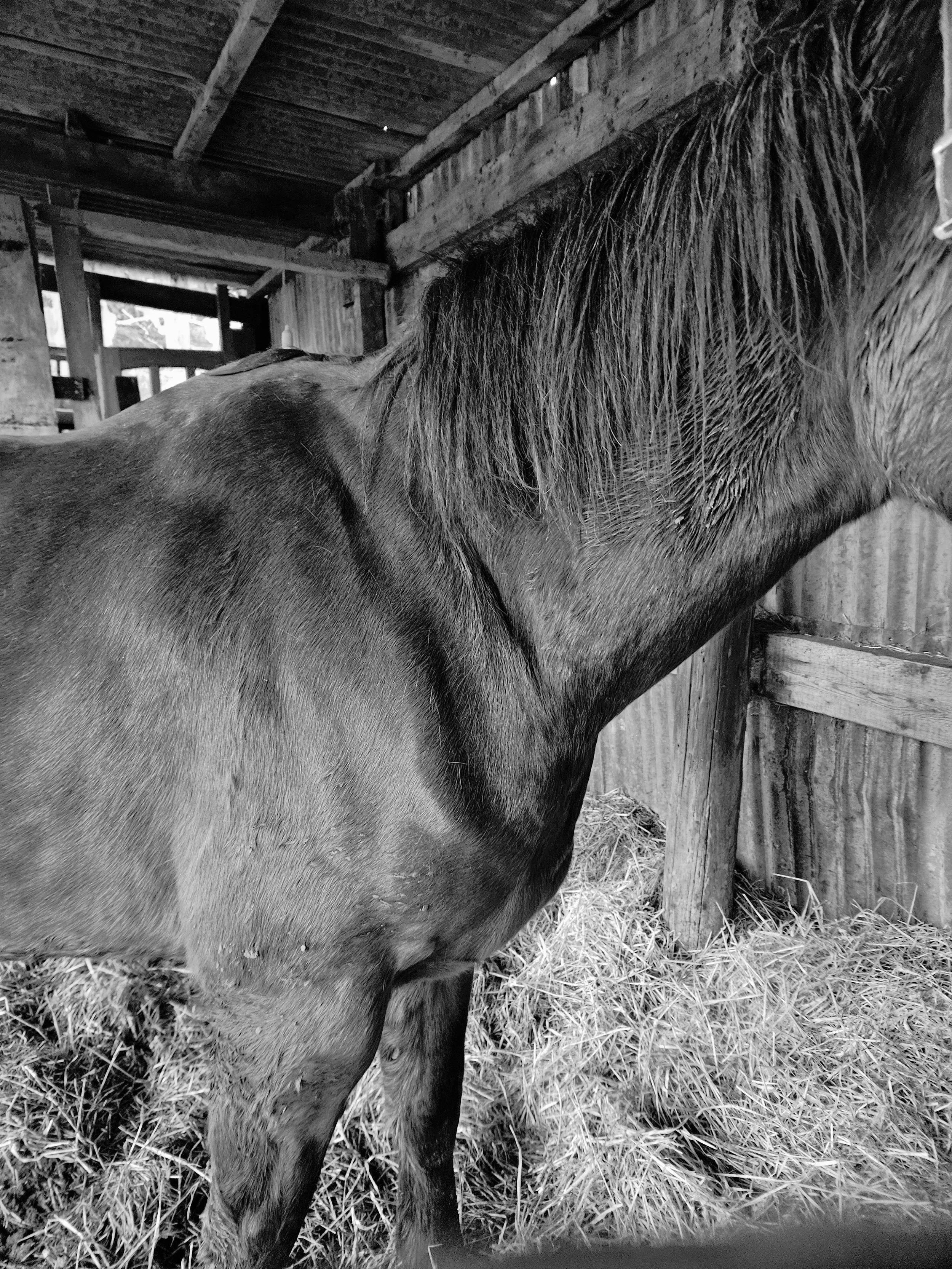
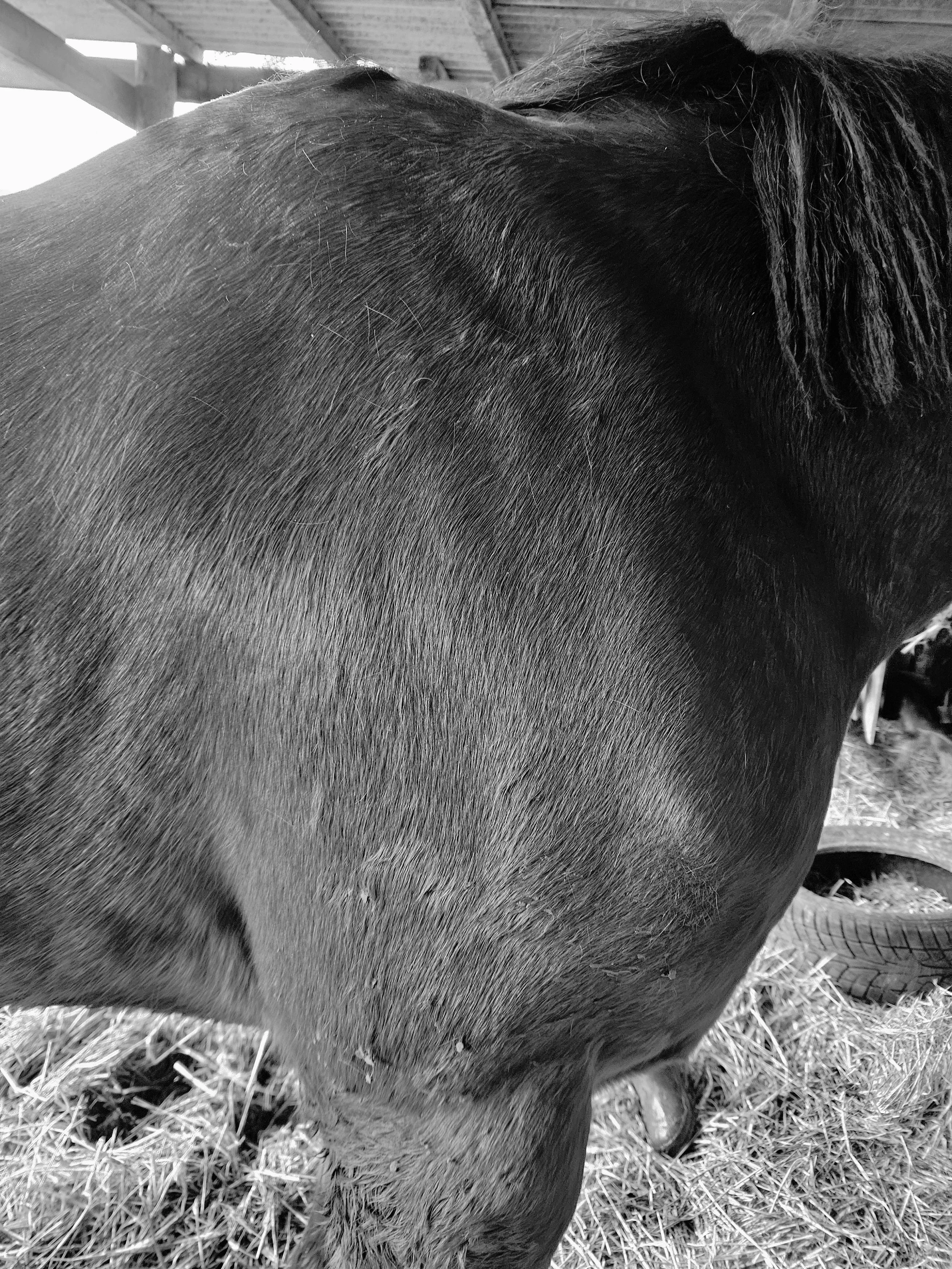
Before and after photos of a client’s horse.
Q - How many sessions did this horse receive to achieve this result?
A - Every horse is different, it also depends on whether the type of trauma was short term or whether it was long term which may have been there for a number of years = consistent with hard work, which tends to be overload, something that may have been there for a while its just gone unnoticed or short term rugs, slipping in the field or those field antics, saddles that require an adjustment So it dose depends as we all know our horses can throw lots at us!!
✨️ These results developed in one session, this horse is attunned to my work with The Equine Touch bodywork, so it started to unravel quite quickly.
As the picture dictates, these results can be very visual..... that is how I discovered about 17 years ago while working on my case studies that I could see the tissue changes, therefore documented each session when i was training with photos of these structural changes as you can see I still use today. Consistency, dedication, progression, respect given to each horse or pony with each visit that I have had..... it is a privilege to work with such a unique palpation, offering each body balance with AOC's to every equine that we work with!! Thank you to our founders Jock Ruddock, for discovering this very unique palpation called THE EQUINE TOUCH and our wonderful vet, anatomist, researcher and lecturer Dr Ivana Ruddock Lange to this day developing and researching the FASCIAL SYSTEM of the equine body....
Session was on 30/01/26 - Combination balance with AOC's adding somatic stretching and mobilisation.
‘Reading the Metabolic Eye’ By Kate Prowse
(Instructor and Practitioner, based in Norfolk)
In horsemanship people often talk about “reading the eye”. Seeing the difference between the staring, vacant eye and the hard, steely eye allows you to have a window into the thoughts and emotions of the horse. Working with a horse in a place where they keep that lovely soft eye is often the secret to success, and most ET students have witnessed that softening of the eye perhaps before the horse slips further into deep internal processing.
Well, over the last few years I have had to make a point to studying the eye of my mare with regard to her metabolic state. Diagnosed with Equine Metabolic Syndrome (EMS), I must be extremely careful about her weight and condition as this frustrating syndrome is one of the most common causes of that cruel disease of the hoof, laminitis. A little similar to Type 2 diabetes in humans, I must manage this horse very closely with diet and exercise to keep her insulin levels healthy to avoid laminitis.
High insulin levels can trigger laminitis, insulin is released in the body to process glucose in the blood and blood sugar levels rise after consuming sugar and starch filled foods, like grass! I wanted another tool to assess her condition day by day and to know whether it was likely to be safe to give her grazing or not. The potency of the grass changes with the seasons and daily with the weather so maybe one day it is fine and the next it is not. Knowing when to change your management regime from a more relaxed winter routine to a restricted spring and summer one, and then assessing whether you can give any grass at all or not, can hopefully prevent that slide into trouble.
EMS is a lifestyle disease directed by her genetics and her environment and I hope to be able to give her the best chance of good health by keeping her on the right side of trouble by controlling her diet and maximising her exercise. Exercise for her is also tricky as she is one of the unfortunate ones with a rather broken body which cannot tolerate hard exercise, but that is another story.
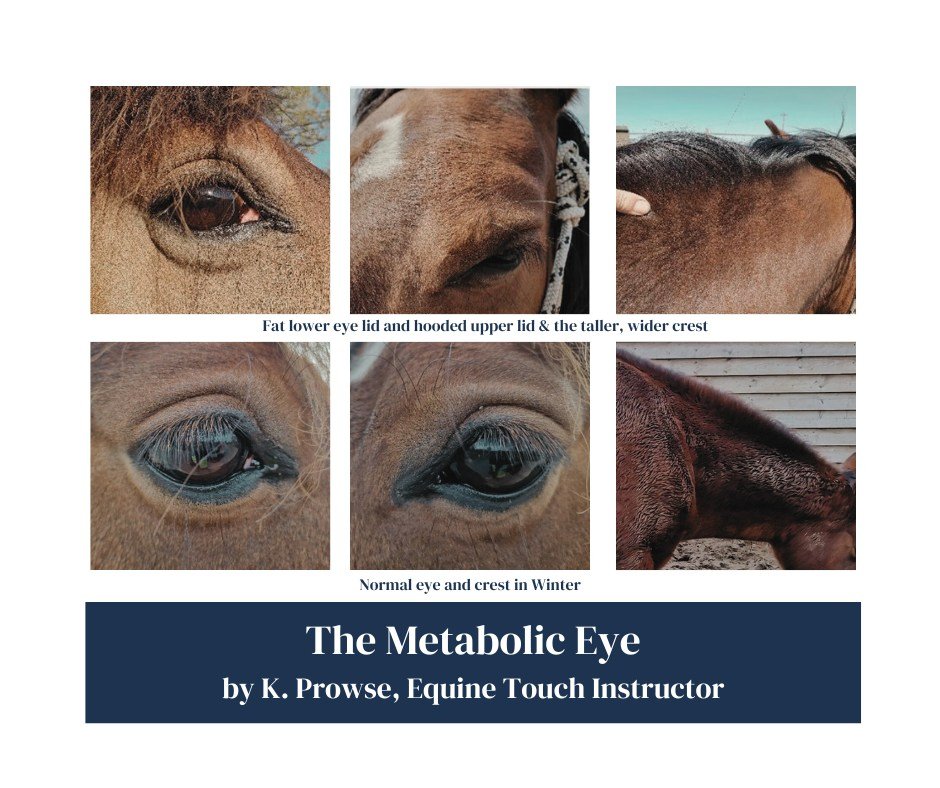
Through the winter months when she was not carrying excess weight and the sugars on the grass were low, I got to know her “lean” body shape and eye. I memorised the shape and texture of the fat pad areas I know she has a tendency to display – tail head, behind shoulder and crest mostly for her. (Other horses may put fat in other places like along the line of the rib shelf). I looked at her eye, the lids in particular, as well as the orbital depression, everyday to become so familiar with it I would spot any changes.
Even as early as February, way before the grass appears to start growing, I have noticed her body shape start to change slightly and that is the first sign that I have to take action. Previously in Essex when I was on a livery yard, I would fence off the centre of the paddock to make a track around the outside – limit access to grass but keep them moving. If I had to stop all grass, say when it was frosty, I had to stable her during the day. Now in Norfolk, I have an area of hardstanding and a sacrifice paddock that I can use to keep her out but limit the grass. It is important to give them hay or other forage as an alternative as it is not about starving them, but about giving sufficient low sugar, appropriate food. If you do not know the sugar content of your hay via analysis, it is probably safer to soak it to remove a higher sugar load (research implies that even an hour can remove a good portion of the soluble sugars). Every day I study her eyes, palpate her rump, squeeze and wiggle her crest, testing the size (particularly the width) and texture. If I am concerned, I feel for a digital pulse and hope not to find one.
By keeping a close watch I am now aware if those fat pads are growing. The horse may not look fat or overweight, maybe even the weigh tape is not telling you that they are bigger, but if these regions start to change shape, it is an early indication that the horse is heading into a danger place.
𝙍𝙪𝙡𝙚 #1. I now regard those fat pads as a polluting factory for making poison (it helps me to stick to the rules!). The fat in the fat pads secrete toxic hormones which make the horse more likely to get laminitis, therefore you need to minimise that fat.
𝙍𝙪𝙡𝙚 #2. As the horse gets into an unhealthy state with high blood sugar and high insulin, those fat pads can become hard. Be very alarmed if those fat pads become hard! If it is happening in the fat of the tailhead, crest, and the eyes with puffy eyelids, it is probably also happening in the feet too. 𝙔𝙤𝙪 𝙢𝙪𝙨𝙩 𝙩𝙖𝙠𝙚 𝙖𝙘𝙩𝙞𝙤𝙣 𝙩𝙤 𝙝𝙚𝙡𝙥 𝙮𝙤𝙪𝙧 𝙝𝙤𝙧𝙨𝙚. As a minimum stop giving them what is making them sick - 𝙜𝙚𝙩 𝙩𝙝𝙚𝙢 𝙤𝙛𝙛 𝙩𝙝𝙚 𝙜𝙧𝙖𝙨𝙨!
Get them off the grass long enough for these body parts to return to normal. If the horse has raised digital pulses and is already suffering foot discomfort, sometimes only noticed when turning on a circle, there are other First Aid measures you can take to try to minimise the damage already happening in the hoof whilst you wait for Veterinary assistance. The simplest, which I have used is to get the horse off the grass, onto soft footing and apply a frog support to pack the foot and reduce the amount of pull on the damaged laminae. I have two foam supports that match the shape of the frog in my Vet Box. You can stick these over the frog with tape or bandage and maybe a boot that help to provide pressure at the back of the foot. If you do not have frog supports a small, rolled bandage can do the same job until the Vet can fit a supportive pad to the bottom of the hoof. Cold therapy and some nutritional support are also said to help. Keeping the foot in iced water to lower the temperature of the hoof tissues can apparently halt the damage of laminitis, but this is recent research and requires special boots, so again contact your vet sooner rather than later.
𝙍𝙪𝙡𝙚 #3. So, what about the eye. The “grass eye” looks fat and puffy. If your horse’s face looks “different” it could well be the eye and 𝙮𝙤𝙪 𝙣𝙚𝙚𝙙 𝙩𝙤 𝙩𝙖𝙠𝙚 𝙖𝙘𝙩𝙞𝙤𝙣. In my experience the lower lid is the first part of the eye to change and the bottom lid can become fuller and thicker. The top lid can also get fuller and begin to look hooded. The dip above the eye, the orbit, can also fill in. The puffy lids can give the impression that the horse is wearing goggles. These eye changes can sometimes be quite subtle but if you consider them in combination with the size and state of the crest and the current weather conditions, you get a pretty clear indicator of whether your horse is becoming inflamed. As we know from human medicine, chronic inflammation, with sugar being one of the biggest culprits, is at the root of many modern lifestyle diseases, so it is not a good state for your horse to be either.
Often in early Spring we have bright sunny days and cold nights. If you understand how grass grows, you will know this is red alarm weather for laminitics. At any time of the year, grass photosynthesises with sunlight during the day to make sugars which the plant will use to grow. However, if it is too cold overnight, roughly below 5 degrees c, the UKs cool season grasses will not grow and just stores the sugar until it warms up and can grow again. So the young grass gets richer. Bright, frosty morning grass is the most dangerous because it is storing the sugar the sun generates until it gets warm enough to grow and use it up. Later in the year when it is warmer overnight, the grass grows overnight using up the sugars from the previous day, so the morning grass is less rich than the afternoon grass which has had all day photosynthesising. This is why on a long, hot summers day, the grass will be more sugary in the late afternoon than the morning, just when may owners want to put their horse out when they get home from work, for a night in the cool paddock. So I watch the eye closely to see if my horse is getting inflamed. The good news is, if I take her off the grass for a day, you can usually see the puffiness go away as she deflates.
It is worth researching more about the sugar in grass after a frost. Even in winter it seems that research indicates that it can take 2 𝙙𝙖𝙮𝙨 for the grass to return to normal 𝙖𝙛𝙩𝙚𝙧 the temperature has come above freezing. That could be a week! It is not just a case of put the horse out on the grass once the frost has melted. The Laminitis App on your phone can help to show what the current grass sugar level is but those of us with a metabolic horse in our care need all the help we can get to keep them safe.
EMS horses are more prone to high insulin levels and therefore have a high risk of laminitis, but I have known several non-EMS horses who have sadly suffered from laminitis and their owners have said with hindsight, that these signs in the body were all there. Ivana, our Founder of The Equine Touch, warned me about puffy eyes years ago but until you see it and know what to look for you can still get caught out, as I have been. Study your horse, take pictures in the winter of their body shape and a close up of the eye, and imprint it on your memory. Some horses never seem to get a puffy eye and are a useful comparison to the more susceptible ones.
I hope that the benefit of my experience can help you navigate this minefield of keeping your horse safe year round but especially in spring and early autumn which are the peak times for laminitis cases. Be mindful of what goes in his mouth and keep up regular exercise with sessions intense enough to increase pulse and respiration at the top of your list.