
Fascinating FASCIA of the equine body with THE EQUINE TOUCH BODYWORK
Fascia is so clever, complex, highly sensitive, responsive, fascinating throughout the equine body, and continuous layers of fascia (connective tissue) that wraps itself around but also supports every organ, blood vessel, bone, the nerves, and every muscle in the equine body.
Composed primarily of collagen and sol fluid, hyrolonic acid, hyronan, and hyrolan, this "web-like" matrix maintains structural integrity, enables muscles to move smoothly, and reduces friction.. When the fascia is at its most healthiest state, it is slippery and flexible, as it glides over each muscle, also its elasticity to extend, and contract with ease.
Fascia can become tight, sticky, restricted, immobile, rigid or dehydrated due to injury, stress, or inactivity, trauma, often leading to pain, discomfort, growing as a youngster, limiting body movement inelasticity can be isolated areas or throughout the entire equine body.
Key Aspects of Fascia:
Structure:
It forms an uninterrupted, 3D web continuously travelling from mouth to hooves, with superficial, deep, and visceral layers of FASCIA .
Support & Protection:
Holds structures in place and provides cushioning, transportation of nutrients, fluids, transmitting messages backwards and forwards throughout the equine body.
Movement: Allows muscles to slide and glide efficiently over each other effortlessly when functional, creating fluidity within each movement the equine chooses.
Sensation:
The FASCIA is Highly innervated with sensory receptors for proprioception (body awareness) awareness, feeling to touch, various pressures are felt throughout the equine body our hand and leg aids but only went the fascia is in a healthy state, it will respond positively.
Any distortion or unevenness, locked Fascia will respond negatively or with no response at all sometimes, it can be neck pain/ discomfort tension, within the forequarters, chest, barrel, lumber hindquarters. Maybe not offering to go forward, girthy, saddle dipping away, lumber uneven tension, the fascia can become rigid and immobile, with flat muscle tone, which can create a buck. The equine may to try and alleviate the discomfort as its feeling uncomfortable pressure, there's always a reason.
Health Issues:
When fascia becomes damaged or restricted (adhesions), it can create "knots" or tightness, often causing pain in areas distant from the actual restriction, a huge proportion of these issues that are obvious are possibly not coming from where you think it is as that it can be referred pain.... but a diagonal stress can be found within those many layers of FASCIA whether contracted or extended, from jaw to ear or from forequarters to hindquarters, simply a larger diagonal...... so this will create the imbalance of each equine, crookedness that we've all heard about. Symmetry is key to function its the alignment of the body.
Maintenance:
Regular movement, stretching, mobilisation, pole work, The Equine Touch bodywork technique is in essence, myofascial releasing...... encourage those contracted layers of Fascia to release bringing hydration to every layer of Fascia. Horses are great at drinking water after each session (drink plenty water), this also help to flush out free radicals or toxins that can sit in the contracted tissue. So fresh water is essential for keeping fascia healthy, flexible, and hydrated functional fascia is healthy Fascia!!
Common Types:
Superficial Fascia:
Located directly under the skin, acting as insulation and padding, when fluid is present.
Deep Fascia:
Dense, fibrous tissue surrounding muscles, bones, nerves, and blood vessels, arteries as tubular fascia. Also ligaments and tendons are thickened fascia.
Visceral Fascia:
Suspends the organs within their cavities, below the saddle area. Remember that when you’re sitting on the horse.....
Releasing the FASCIA with The Equine Touch has such a profound impact on the body when Fascia when its dysfunctional to improve the fascial function on many different levels its possible to adjust the muscles, ligaments and tendons with this light palpation.
Correctly adjusting the FASCIAL SYSTEM decreases tension, opens up restrictions to improve function throughout the equine body structurally rebalancing the whole body system. Given time the release response reaction from each palpation triggers the response within the restricted Fascia, its absolutely fascinating that our light palpation can and will influence positive changes throughout the equine body.....
Release the FASCIA.... as you can see the correction of fascia from dysfunction to function not only when I discovered visual changes you can feel the difference when ridden..... releasing the FASCIA is key to correction..... expect the unexpected.....
☆DYSFUNCTIONAL to FUNCTIONAL!
Especially at this time of year with our horses with variable rugs, which create uneven weight pressures to the body tissue, rug banding rubbing on chest, neck, rhomboid at the withers, even if you have or use leg straps, they are rubbing on the inside thigh - on the gracilis muscles creating issues..... bracing while tramping through the mud, slipping, jarring, standing static around feed stations immobile...... it all creates the body to become restricted through Fascial discomfort..... over these last few months the horses have been challenged too with the weather temperatures fluctuating.
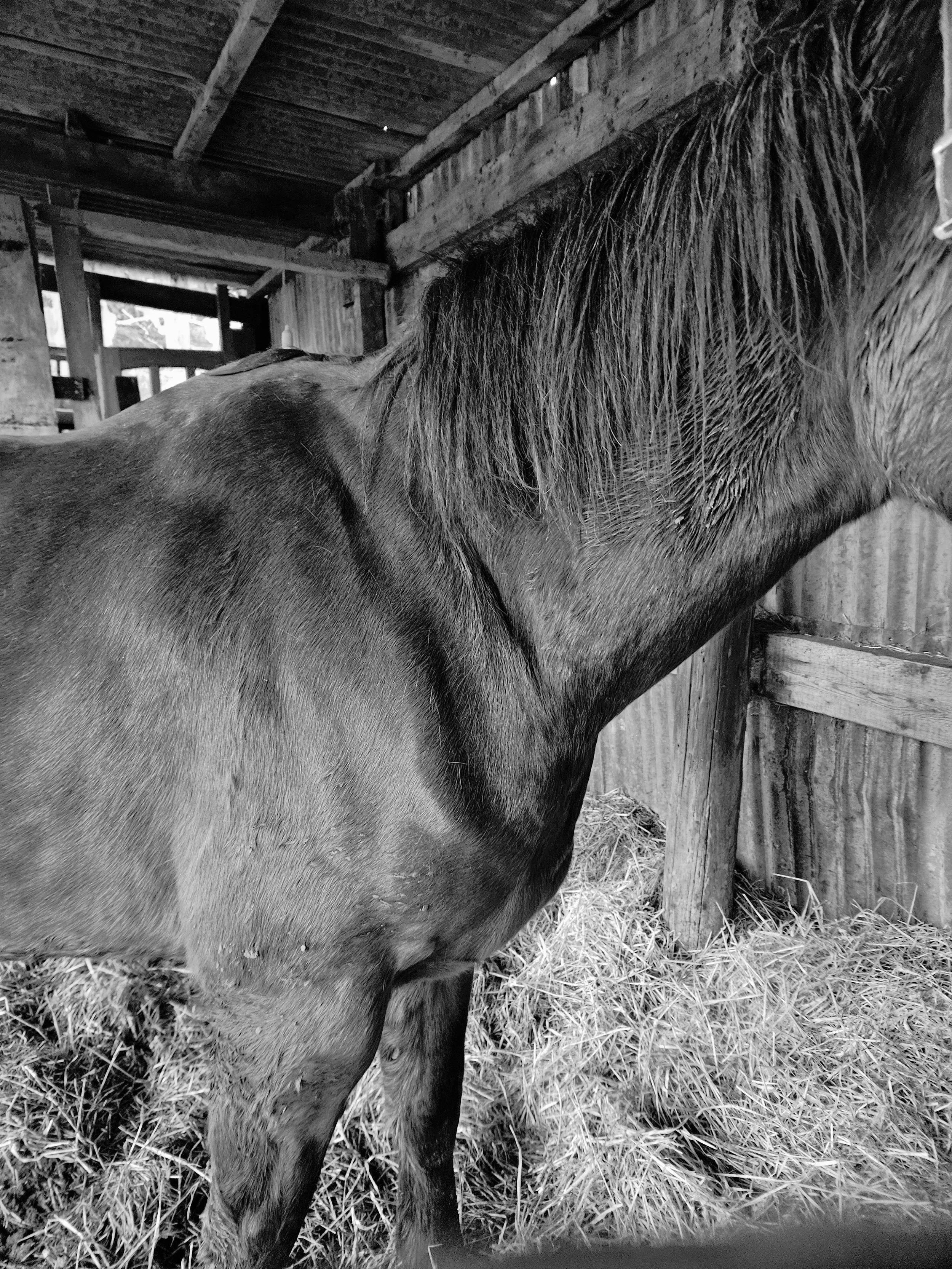
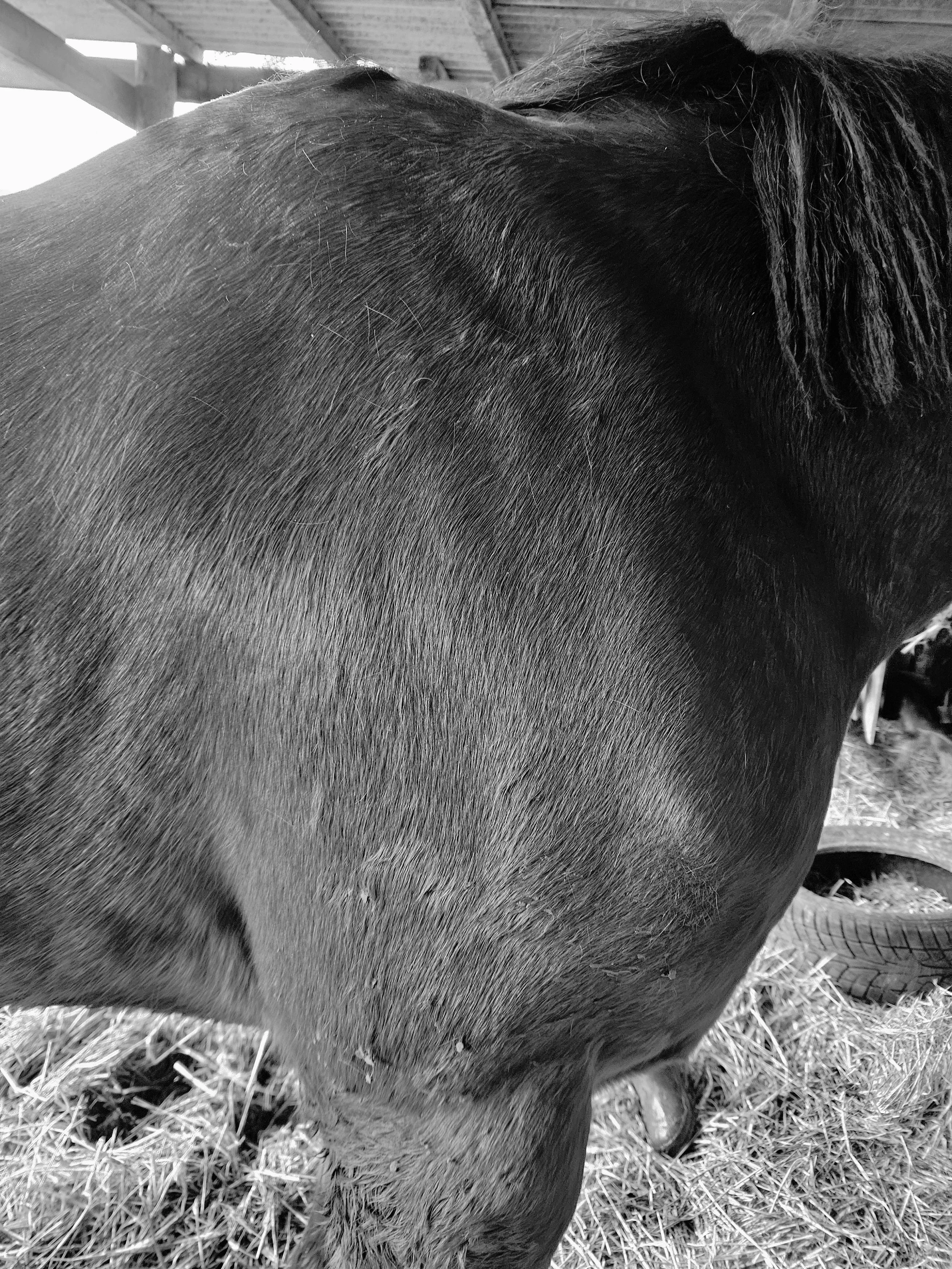
Before and after photos of a client’s horse.
Q - How many sessions did this horse receive to achieve this result?
A - Every horse is different, it also depends on whether the type of trauma was short term or whether it was long term which may have been there for a number of years = consistent with hard work, which tends to be overload, something that may have been there for a while its just gone unnoticed or short term rugs, slipping in the field or those field antics, saddles that require an adjustment So it dose depends as we all know our horses can throw lots at us!!
✨️ These results developed in one session, this horse is attunned to my work with The Equine Touch bodywork, so it started to unravel quite quickly.
As the picture dictates, these results can be very visual..... that is how I discovered about 17 years ago while working on my case studies that I could see the tissue changes, therefore documented each session when i was training with photos of these structural changes as you can see I still use today. Consistency, dedication, progression, respect given to each horse or pony with each visit that I have had..... it is a privilege to work with such a unique palpation, offering each body balance with AOC's to every equine that we work with!! Thank you to our founders Jock Ruddock, for discovering this very unique palpation called THE EQUINE TOUCH and our wonderful vet, anatomist, researcher and lecturer Dr Ivana Ruddock Lange to this day developing and researching the FASCIAL SYSTEM of the equine body....
Session was on 30/01/26 - Combination balance with AOC's adding somatic stretching and mobilisation.